About
We build this from inside a repair shop.
Not from a conference room, and not from a list of features somebody guessed at. From the bench, the bay and the counter.
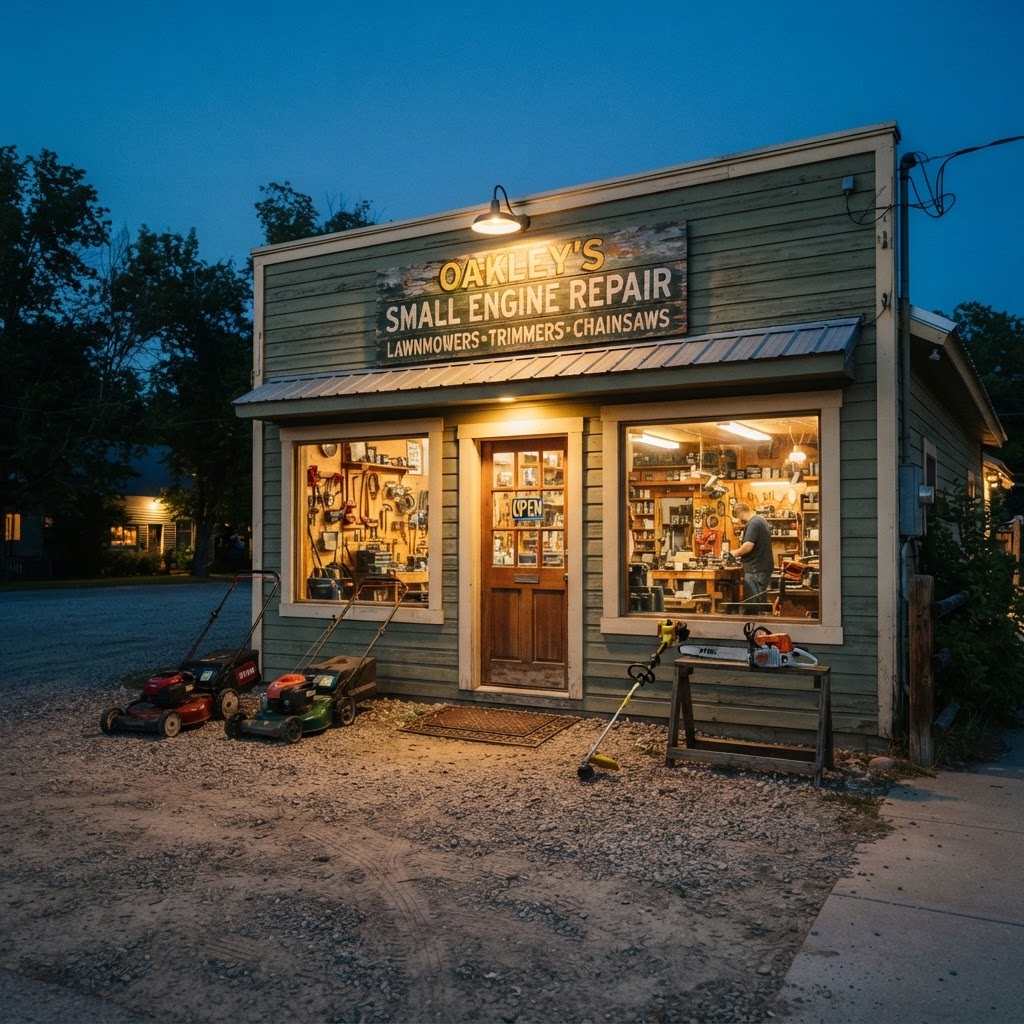
“I’ve spent years with my hands inside mowers, generators and chainsaws. What ate my evenings was never the wrench — it was the paperwork.”
In a small engine shop, the work itself is the easy part. You diagnose it, you fix it, you hand it back. The part that wears you down is everything wrapped around it: the ticket you wrote on a scrap of paper, the estimate you meant to send Tuesday, the invoice stack that waited for a quiet Sunday night, the callback that slipped because a mower came in with a seized deck.
Most shop software is built for a dealer with a service writer and a front desk. Small engine work does not look like that. It is one person at a bench, or three people sharing a bay, taking in push mowers, trimmers, generators, snowblowers and the occasional machine nobody makes parts for anymore.
So ShopClutter is built the way the shop actually runs. Fast intake. A board that matches the floor. Estimates and invoices that go out from the same phone in your pocket. Parts, hours, and pay that add up without you doing the math at midnight. And the small things that keep a shop honest — the reminder, the time clock, the record of who changed what.
We are still a shop tool first. Every release starts with a question from the bench: does this make the day easier, or just busier?
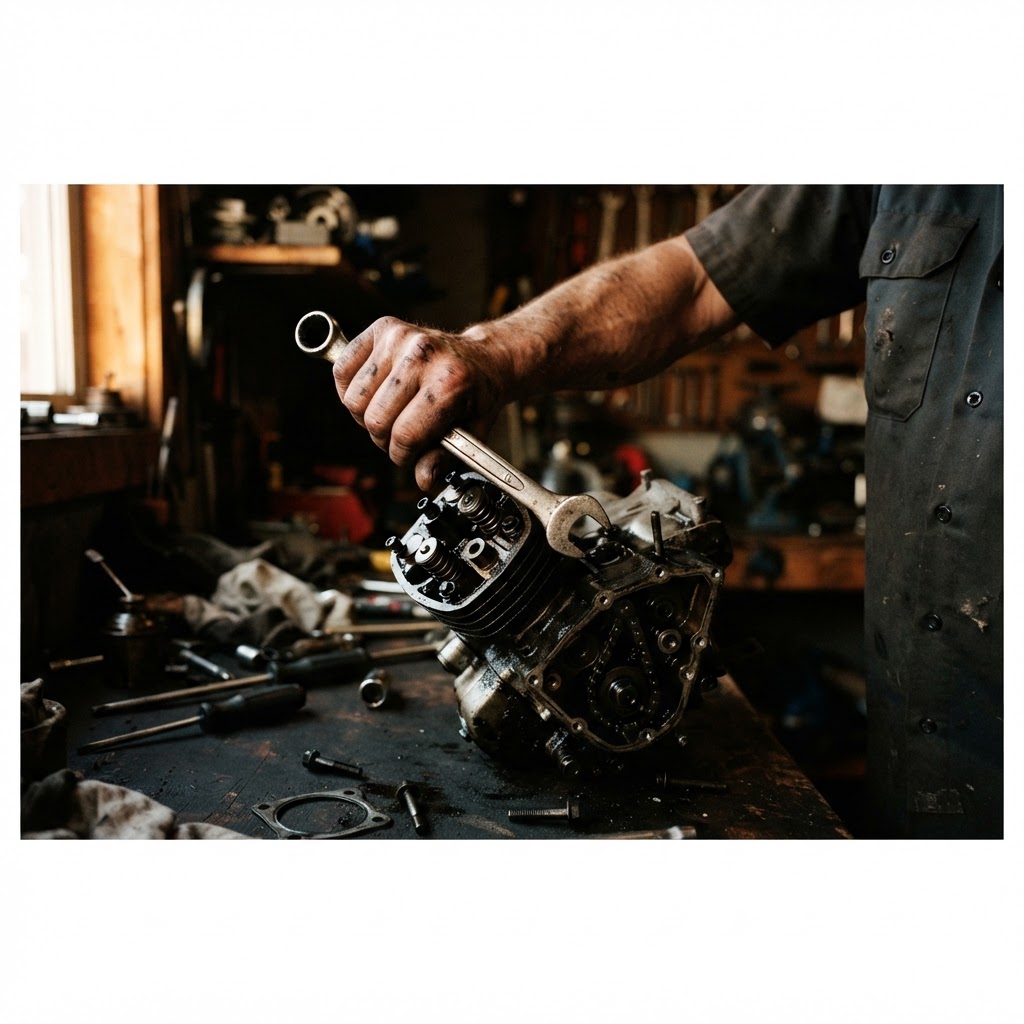
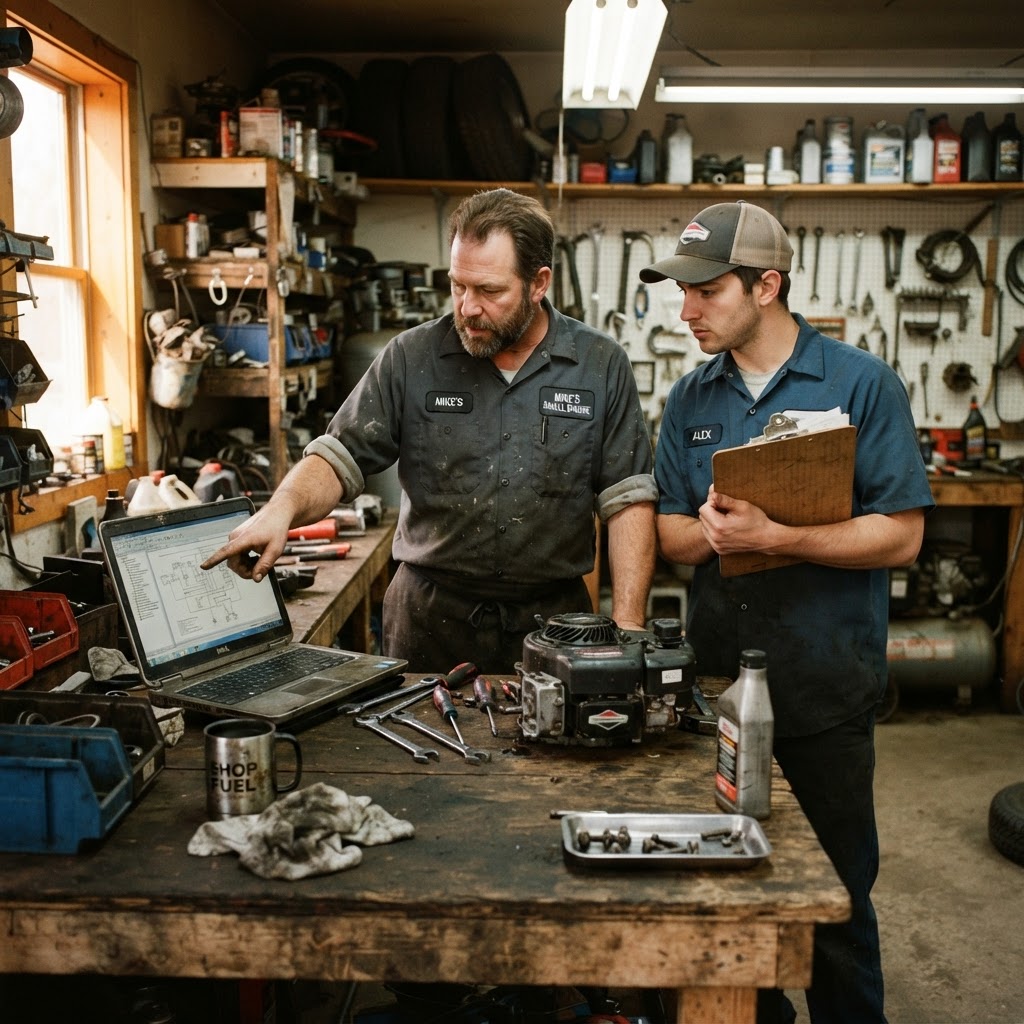
What that means for the app.
Built on a real bench
Every screen exists because a shop needed it — the ticket that follows a unit from intake to closed, the parts and hours that tell you whether a job made money.
Fast enough for dirty hands
Taking in a job happens between two other jobs. It should take a minute, on a phone, standing at the bench — not a training session at a desk.
One person or a full crew
A solo mechanic should never pay for a scheduling committee, and a shop with three bays should never outgrow the tool in a year.
The road matters too
Plenty of this work happens at the customer’s place. The address, the route and the callback all belong on the same ticket as the repair.
Built for your bench.
Start free, take in a job today, and tell us what would make the day easier.